Colombia Travel Safety: Bogotá, Medellín, Cartagena Guide
City-by-city safety risks in Bogotá, Medellín and Cartagena, plus a verification routine for the people you meet online before you meet them in person.
Key takeaways
- The US State Department rates Colombia at Level 3 (“Reconsider Travel”), with Level 4 “Do Not Travel” zones in specific border and rural regions. Bogotá, Medellín and Cartagena are not in those zones, but the overall level calls for real precautions.
- Each city has distinct risks: phone theft and unlicensed taxis in Bogotá, dating app scams in Medellín, and overcharging plus pickpocketing in Cartagena.
- A dating app match is not a verification: run a video call, a reverse image search, and save profile screenshots before agreeing to meet anyone.
- Romance scams cost victims a reported $1.14 billion in 2023, according to the FTC, and tourists are preferred targets because they are new in town and gone before they realize money was the point.
- Dial 123 for police, ambulance, or fire anywhere in Colombia, and save it in your phone before your first meetup.
Colombia travel safety comes down to two separate risks: street-level theft in Bogotá, Medellín, and Cartagena, and the people you meet online before you meet them in person. This guide covers both, city by city, with a verification routine for dating-app matches that most safety guides skip entirely.
How safe is Colombia for tourists compared to common perceptions?
Colombia’s reputation is stuck in the 1990s, but the real risk picture is more specific than “safe” or “unsafe.” The US State Department currently rates Colombia at Level 3, “Reconsider Travel”, citing crime, terrorism, civil unrest and kidnapping, with Level 4 “Do Not Travel” warnings for specific regions such as Arauca, Cauca (outside Popayán), Norte de Santander (outside Cúcuta) and the Venezuela border area.
Millions of tourists still visit Bogotá, Medellín, and Cartagena each year without incident. Most of the risks you’ll actually face there are ordinary ones: petty theft, drink spiking, and scams that target people who look distracted. You don’t need to cancel a trip, but you do need city-specific habits, and the one risk travelers consistently underestimate is the people they invite into their plans, from drivers and guides to dating app matches.
What are the biggest safety risks in Bogotá, Medellín, and Cartagena?
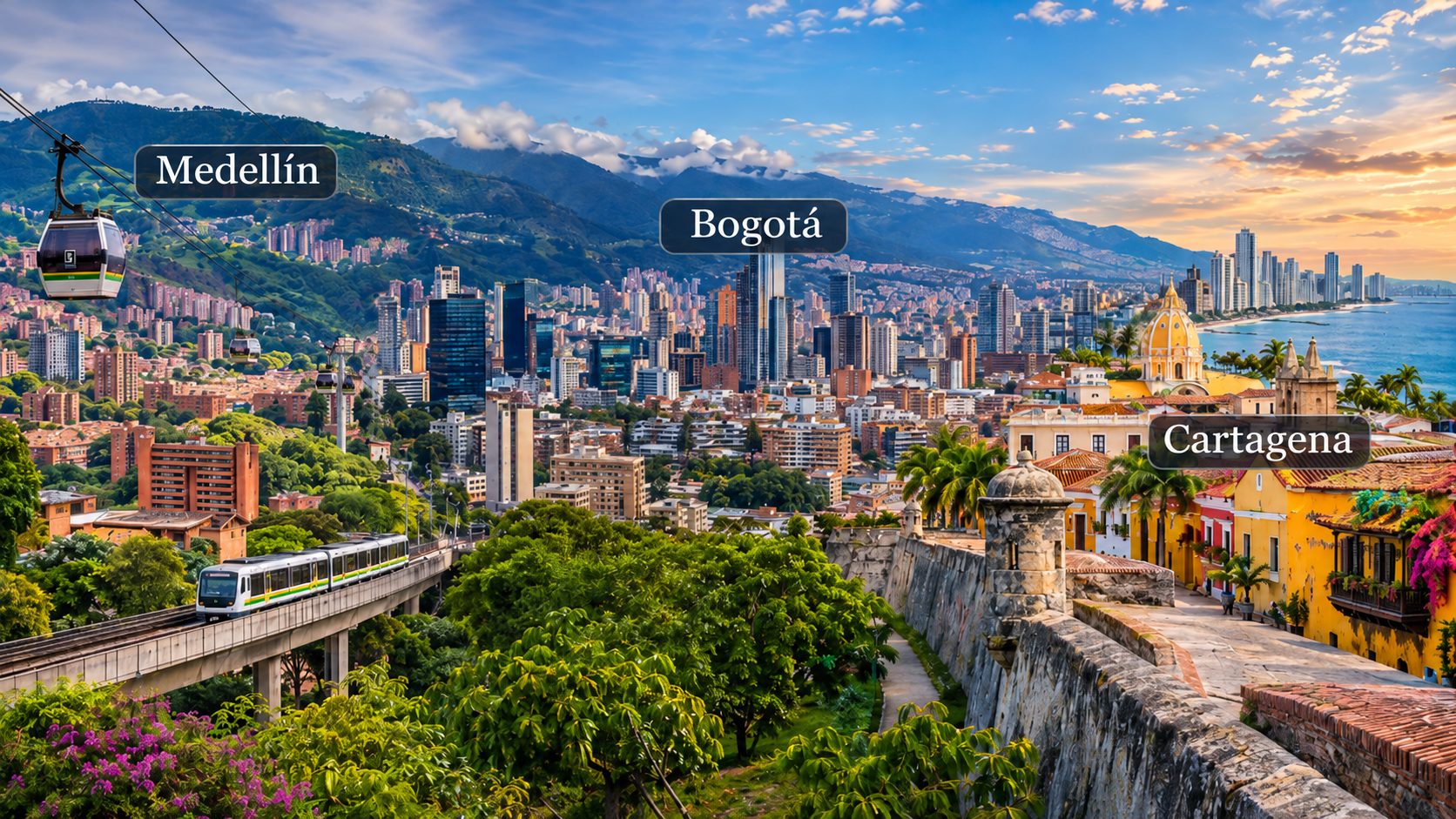
The risks that matter in Bogotá rarely match the ones travelers report in Medellín or Cartagena, so a single generic routine leaves gaps.
Bogotá: neighborhoods and transit
The most reported issues in Bogotá are theft on TransMilenio, phone snatching near crowded transit hubs, and overcharging by unlicensed taxis. Stick to app-based rides after dark, keep your phone away from the curb side of the sidewalk, and know which neighborhoods you’re crossing. Areas popular with visitors, like Chapinero and La Candelaria, change character quickly a few streets over, so check your route before walking it.
Medellín: dating apps, day trips, and the Comuna 13 effect
Medellín’s risks skew toward scams that start online. Travelers report matches who steer them toward specific bars with inflated bills, or who propose day trips that turn into setups. The US Embassy has issued security alerts about deaths linked to online dating apps and a 2026 alert about dating-app druggings in Medellín. The Comuna 13 tour boom also draws crowds, and that concentration of tourists attracts pickpockets and fake guides. Book tours with guides whose identity you can confirm, and treat a match as a stranger until you have confirmed who they are.
Cartagena: old town, Getsemaní, and beach vendors
Cartagena’s problem areas are concentrated: aggressive beach vendors in Bocagrande, overcharging in Getsemaní’s nightlife strips, and pickpocketing in the walled city’s crowded plazas.
| City | Most reported risk | Where it happens | First move |
|---|---|---|---|
| Bogotá | Phone theft, unlicensed taxis | Transit hubs, edges of La Candelaria | App-based rides only |
| Medellín | Dating app scams, fake tour guides | Bars, Comuna 13, day trips | Verify before you meet |
| Cartagena | Overcharging, pickpocketing | Beaches, Getsemaní, plazas | Agree on prices first |
Across all three, the pattern is the same: risks are situational, not constant, and most incidents happen when a traveler skips a check they would make at home.
What is a catfish in dating and why should travelers to Colombia care?
Catfish meaning in dating: the short definition
A catfish is someone who runs a dating profile using a fake name, stolen photos, or a manufactured backstory. The person you’re messaging may not match the photos at all, or may exist but not be who they claim to be. A match is not a verification: dating apps rarely confirm that a profile belongs to a real, identifiable person.
Why tourists are the preferred target
Travelers are ideal targets because they’re new in town, open to meeting people, and gone before they realize money was the point. Romance scams often move quickly toward a crisis: a hospital bill, a stuck visa, a taxi that never arrives. The UK Foreign Office’s travel advice for Colombia also warns visitors to be careful when meeting people online. If someone you have never met in person asks for money, the answer is no.
What red flags signal a romance scam targeting tourists in Colombia?
Profile red flags
A verified-looking profile is not a verified identity. Photos are frequently stolen, and polished images with few tagged or candid photos are a classic sign. Watch for profiles that mention being a model, soldier, or engineer abroad, and for recently created accounts.
Conversation red flags
Fast, intense affection is the most common opening move. Someone who calls you their soulmate within days, pushes to move off the app onto WhatsApp or Telegram before you’ve confirmed anything, and avoids video calls is following a script, not building a connection.
The money ask rarely arrives labeled as one. It shows up as a stuck customs package, a medical emergency, a blocked bank account, or a request to help cash a payment. Any of these is your cue to stop sending money and stop sharing documents.
First-meeting red flags
Before you go, insist on a video call. Refusals, sudden reschedules, or a voice that doesn’t match the photos are reasons to walk away.
When you do meet, choose a public place you picked, tell someone your plan, and stay in control of your own transport. A date who insists on their driver, a specific bar you didn’t choose, or a second location “just down the street” deserves suspicion. Drugged drinks are a real risk: keep your glass in sight and leave anything that tastes off.
How can you verify someone you met on a dating app before meeting in person?
The 10-minute verification routine
A match is not a verification. Before you agree to meet, run a short routine: video-call the person once, check whether their photos appear elsewhere (a reverse image search through Google Lens is enough), and confirm the first-meeting spot is public and busy. If someone refuses a video call, treat that as a red flag and move on. Save their profile screenshots and the number they message from.
If the meetup is a tour or a driver rather than a date, ask the operator for the guide’s full name and license details ahead of time, then confirm the person who shows up matches. Save 123, Colombia’s emergency line, in your phone before your first meetup.
Where VeraID fits, and where it falls short
VeraID is our product. Guides, drivers, hosts and professionals verify their government ID with a biometric check and get a permanent TRU ID. Before you meet, you ask for their TRU ID and look it up in the app: you see their photo, first name and verification status, so you can confirm the person who shows up is the verified person behind the code. Visitor plans cost $5.99, $14.99 or $19.99.
Be honest about the limits: verification confirms who someone is, not their intentions, and it only covers people who have registered and verified. Pair it with the routine above rather than treating it as a substitute.
How do you adjust your safety routine when dating apps are part of your trip?
Dating apps change the math: you’re meeting a stranger whose profile is a claim, not a verification. Treat every match as unverified until you confirm it. Romance scammers took a reported $1.14 billion from victims in 2023, according to the FTC, and in-person meetups are where cash-extraction pitches often land.
Adjust your routine in three ways. First, verify before you meet: a video call plus an identity check beats a curated photo grid. Second, move your check-in habit from tours to dates, telling a friend or hotel staff where you’re going and when you expect to be back. Third, keep money out of the conversation entirely. Anyone who mentions an investment, a crypto platform, or a customs fee before or during your first meeting is running a script, not a relationship.
What should you do if a date or meetup goes wrong while traveling in Colombia?
Emergency numbers and reporting options
Dial 123 for police, ambulance, or fire anywhere in Colombia. It works from any phone, including foreign SIMs. To file a police report, ask for the nearest CAI (small neighborhood police post); hotel staff can usually point you to one and help translate if your Spanish is limited.
Contact your embassy if your passport is taken or you’re the victim of a serious incident. Embassies cannot investigate, but they keep lists of English-speaking doctors and can help you replace documents.
Safety apps that pair with your plan
Have a check-in habit before you go: tell one person where you are and when you expect to be back. Apps can back that up. Noonlight and UrSafe let you trigger help from your phone, Life360 keeps family back home aware of your movements, and Citizen offers incident alerts for the areas you’re in. VeraID fits the earlier step: confirming who you’re meeting before you go. No app replaces the basics: meet in public, keep your own transport, and leave if something feels off.
FAQ
Do I need to verify my own identity to use VeraID as a traveler?
No. As a visitor, you create an account and look up the TRU ID of the guide, driver, host or professional you’re meeting. The identity check is done by the person being looked up, and you see only their photo, first name and verification status, never their ID document.
What is the safest way to meet someone from Tinder or Bumble in Medellín?
Run the verification routine first: one video call, a reverse image search on their photos, and screenshots of their profile. Then meet in a public place you chose, tell a friend or hotel staff your plan, and keep your own transport. Refuse any venue they insist on, especially a specific bar, and leave if a second location comes up.
Are dating app scams in Colombia different from regular catfish scams?
The mechanics are the same: stolen photos, fast affection, and eventually a money ask. What differs is the setting. Tourists are targeted because they’re new in town, less likely to follow up, and often meeting in person, which shifts scams toward inflated-bar setups, fake day trips, and drink spiking rather than purely online extraction.
Which areas of Cartagena should I avoid at night?
The walled city and Getsemaní are generally fine in busy, central stretches, but risk concentrates in specific spots: crowded plazas where pickpockets work, Getsemaní’s nightlife strips where overcharging is common, and quieter streets just outside the tourist core. Bocagrande’s beach areas draw aggressive vendors and are best avoided after dark. Use app-based rides between neighborhoods at night.
Verify before you meet
Look up a provider's TRU ID and see their photo and verification status in seconds.